
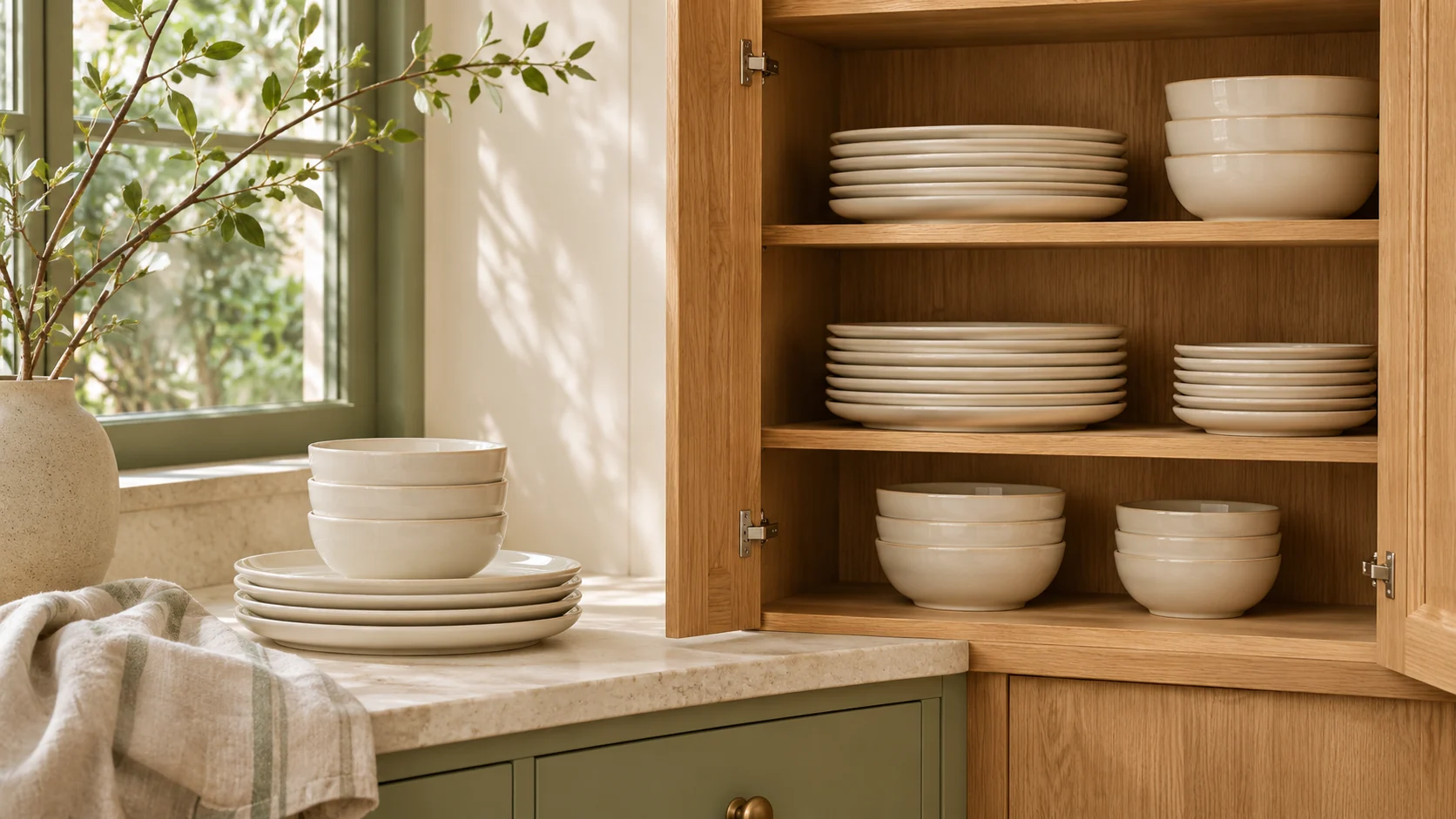
Opening the kitchen cabinet and finding mismatched plates, unused bowls or unstable stacks is more common than it seems. A visual dinnerware inventory lets you see at a glance which pieces stay in rotation, which ones are surplus and whether the available space can actually hold them. This infographic is designed for anyone who wants to stop buying blindly and organise tableware according to real household use, not according to what accumulates over time.
What to check before buying dinnerware
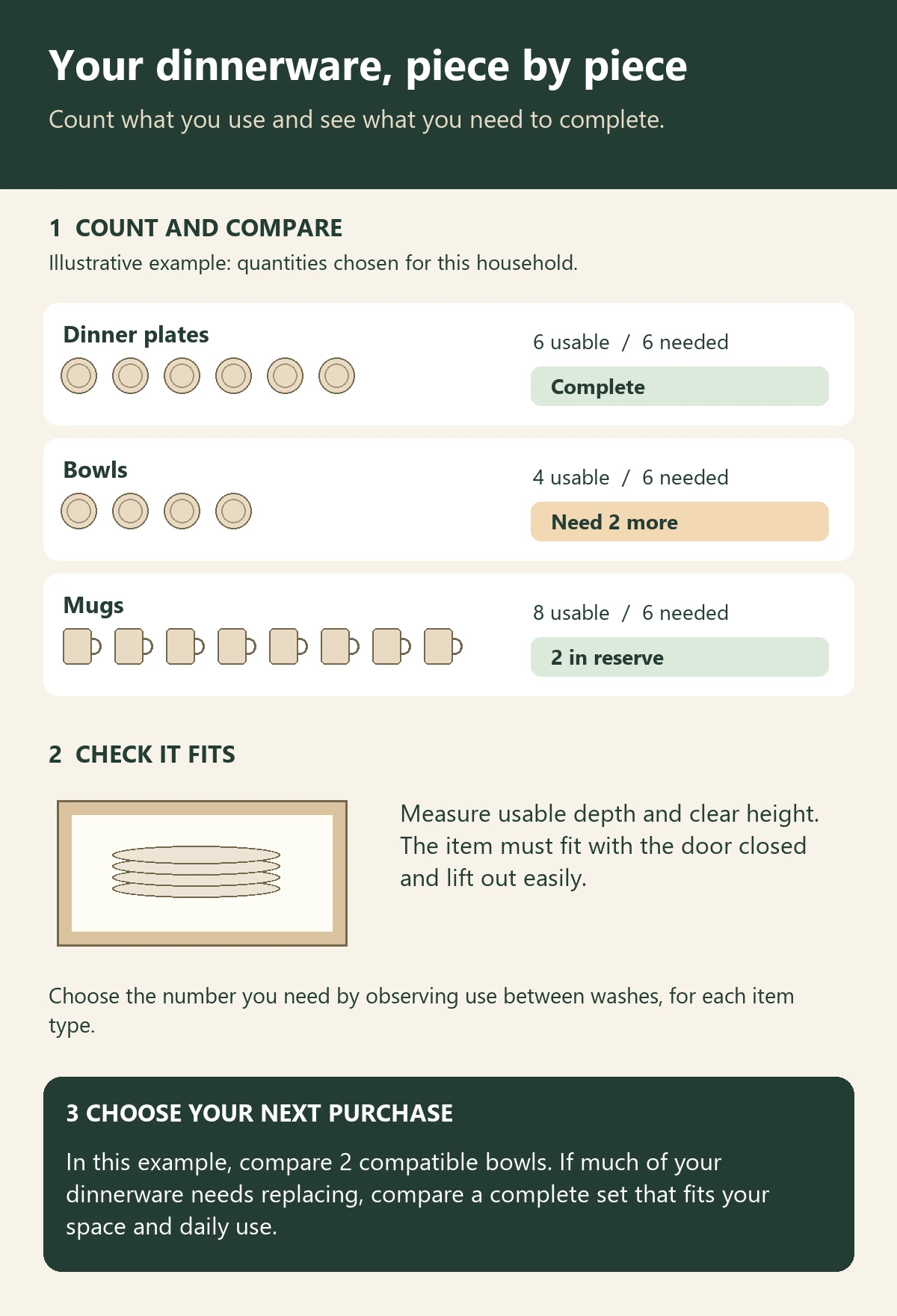
Illustrative example shown above: this household chose 6 of each item for its usual use between washes. It has 6 usable dinner plates, 4 bowls and 8 mugs. The count identifies 2 missing bowls and 2 mugs in reserve. Your required quantities will depend on your own use.
The inventory, step by step
Count of pieces in use and rotation
List only the pieces that enter the usual cycle. Distinguish dinner plates, bowls or deep plates, dessert plates and cups. Instead of general formulas, make a real count by type in the number of days that typically pass between washes. Example: in a household of three that runs the dishwasher every two days, note how many plates, bowls and cups are actually used in that period. That number better guides the need for each type.
Classification by condition and usefulness
Separate the tableware into three groups. Daily rotation pieces: those that go from use to sink or dishwasher frequently. Reserve or gathering pieces: the compatible set you bring out when guests arrive. Unused or damaged pieces: cracked, chipped or items not used in the last year. The last group takes up space and hinders organisation; it is better to set them aside.
Measuring depth and stacking height
Before deciding what to buy, check the real cabinet space. Measure useful depth from the back of the shelf to the inner face of the closed door: the largest plate must not rub. Review free height between shelves so you can remove the top plate without knocking others. These two measurements prevent purchases that later do not fit or become awkward to use.
Decision between replacement or full set
With the data above the decision becomes simpler. If the main set is in good condition and only a few pieces are missing, spot replacement is usually enough. If wear or breakage affects a large part of the service and the cabinet accepts the new dimensions, it makes sense to consider a full set. If you have not yet measured depth and height, the most prudent step is to wait before buying.
Replace individual pieces or buy a set?
A visual dinnerware inventory is not about filling cabinets; it is about aligning what you own with what you actually use and with the available space. By separating daily pieces from reserve and damaged ones, and by checking shelf measurements, you reduce impulse purchases and gain order in the kitchen. The benefit shows every day: fewer falling pieces, less time searching and a more coherent table.
Before you decide
Before placing any order, spend a few minutes completing this visual dinnerware inventory. Note the usable pieces by type, review your real use between washes and measure the cabinet. With that clear information you can decide with greater confidence whether you only need to replace a few items or whether it is better to renew the set.
A guide to planning household purchases
How to choose storage for your daily routine
Discover more from Unique trends in fashion, home décor, lifestyle, and gifts
Subscribe to get the latest posts sent to your email.