
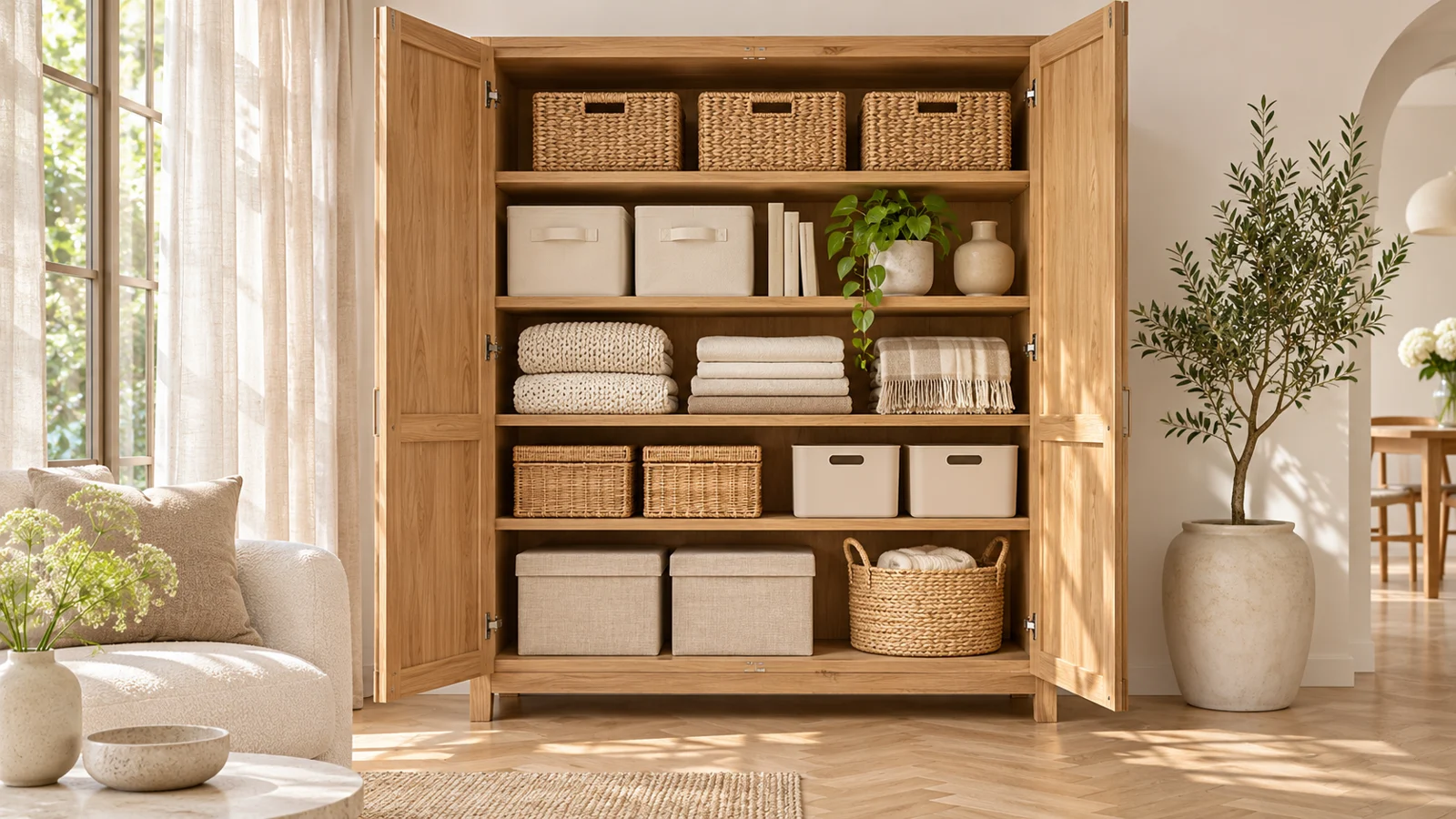
You have a drawer that no longer closes, a shelf that has become a pile of things and the feeling that you need ‘more space’. Before buying another piece of furniture, there is a question that saves a lot of money: what do you actually keep, and how often do you use it? The answer completely changes the type of storage that suits you. This guide helps you choose storage based on your routine, not on the catalogue photo.
Estimated reading time: 7 minutes. Three steps, a practical test and four common questions. If you want the general framework before you start, the guide to preparing household purchases has the full method.
Classify your belongings: daily access or secondary storage
Before looking at furniture, look at what you have. Gather the items you want to organise on a table and split them into two groups: what you use every day and what you keep in reserve. The stationery on your desk is not the same as the seasonal boxes.
The most common mistake is treating all objects the same. A cable you use every morning needs a drawer that opens towards you and stays visible. An archive box you open once a year can live on a high shelf or at the back of a closed cabinet.
Make a quick list with three columns: item, approximate size and how many times a month you use it. With that list in hand, any piece of furniture can be checked in seconds. What you use daily, at hand. What you use occasionally, protected and set apart.
Last update 11/17/2026
As Amazon Associates, we earn from qualifying purchases.
Final price and availability are confirmed on Amazon at the time of purchase.
More details in our affiliate disclosure.

Drawers or shelves: which structure fits each type of object
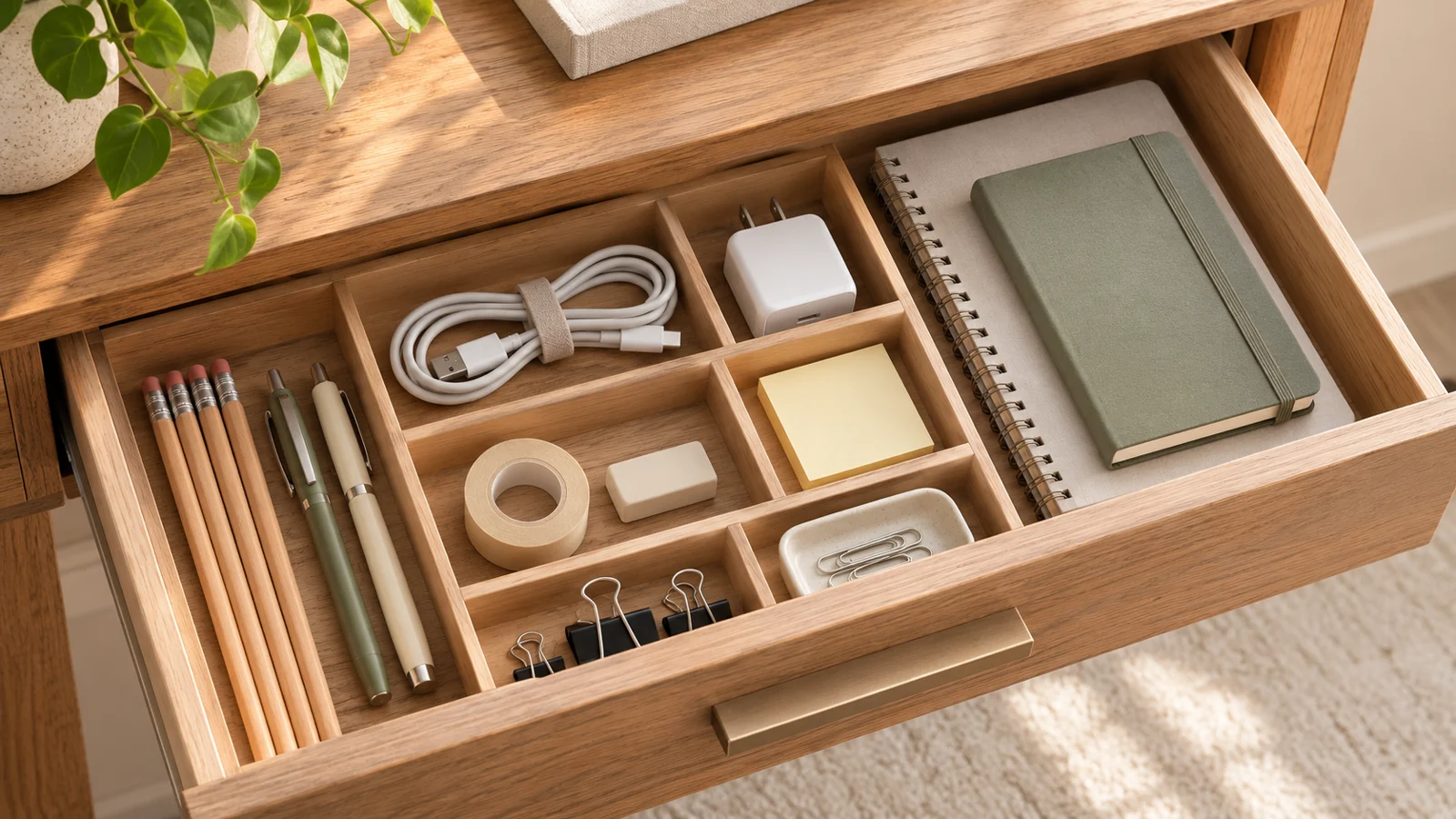
With the list of items in hand, it is time to choose the type of furniture. Drawers are practical for small, flat items: stationery, cables, lingerie, light tools. Doors with shelves make better use of height for large items or closed boxes.
Before deciding, think about how you pick things up. A drawer opens towards you and lets you see everything inside. A deep shelf forces you to move other boxes to reach the back. If your routine is rushed in the mornings, a drawer with dividers saves you time.
There are also mixed pieces: a top drawer for the small things and lower doors for the big ones. They can be the best option if you have a bit of everything. What matters is not the piece itself, but how it fits your most frequent items.
The in-home test: how to check capacity before buying
Before paying, do a test with what you have at hand. Take the three bulkiest items you want to store, measure them with a tape measure and compare them with the usable interior measurements listed by the seller or in the technical sheet. If you don’t have the sheet in front of you, ask for it before deciding. To get an idea of the base and the depth, you can mark the outline on the floor with painter’s tape or with a cut-out cardboard box, without expecting that alone to guarantee the piece will fit. If you can see the piece in a physical store, take the chance to inspect it, open drawers or doors and check the inside with your own eyes.
Then measure the space where the piece will go and check that the doors or drawers open without hitting other elements. Leave free passage in front. A piece that blocks the way ends up bothering you every day, however well it organises the inside. If the spec sheet gives the total height including the legs, do not add the leg height again.
Finally, ask yourself whether the piece solves your current problem or simply moves the clutter somewhere else. If the answer is not clear, wait. A thoughtful purchase is always enjoyed more.
You can use this quick checklist before buying:
Capacity test before buying
Tick each box once you have checked it with the spec sheet or a physical inspection. This list sends no data and saves nothing: when you leave the page, the boxes clear. You can copy it on paper before closing.
This list sends no data and saves nothing. When you reload or leave the page, the boxes clear. You can copy it on paper or in a notebook before closing.


Conclusions for an organised and comfortable home
Storage that works is not the one with the most compartments: it is the one that fits what you keep and how you use it. Separating by frequency, choosing drawers or shelves according to the object and testing capacity before buying are three steps that prevent purchases that end up getting in the way.
If you want to go deeper into the criteria for a useful purchase, the article what is a useful home purchase gives you the framework. And if you already know what you need but want to organise your budget, the shopping plan by priority helps you decide the order.
Frequently asked questions about storage systems
Is a piece with drawers or with doors better?
It depends on what you store. Drawers work well for small, flat items you want to see when you open them. Doors with shelves make better use of height for large items. If you have a bit of everything, a mixed piece can be the most practical option.
Is it worth buying an organiser for a drawer I already have?
Yes, if the drawer is the right place and it only lacks internal order. A divider or a tray can solve the problem without buying new furniture. If the drawer does not have the depth or height you need, the organiser will not fix it.
How do I know if a piece will fit the space?
Measure the width, height and depth of the space, and compare them with the piece’s measurements. Do not forget the baseboard and the space doors or drawers need to open. Check whether the stated total height includes the legs so you do not add them twice.
What do I do with items I never use?
Separating them is the first step. If you have not used them in a year and they have no emotional value, they may not need a new piece of furniture: they may need to leave the house. If you keep them just in case, a closed box in a separate place is enough.
Discover more from Unique trends in fashion, home décor, lifestyle, and gifts
Subscribe to get the latest posts sent to your email.