
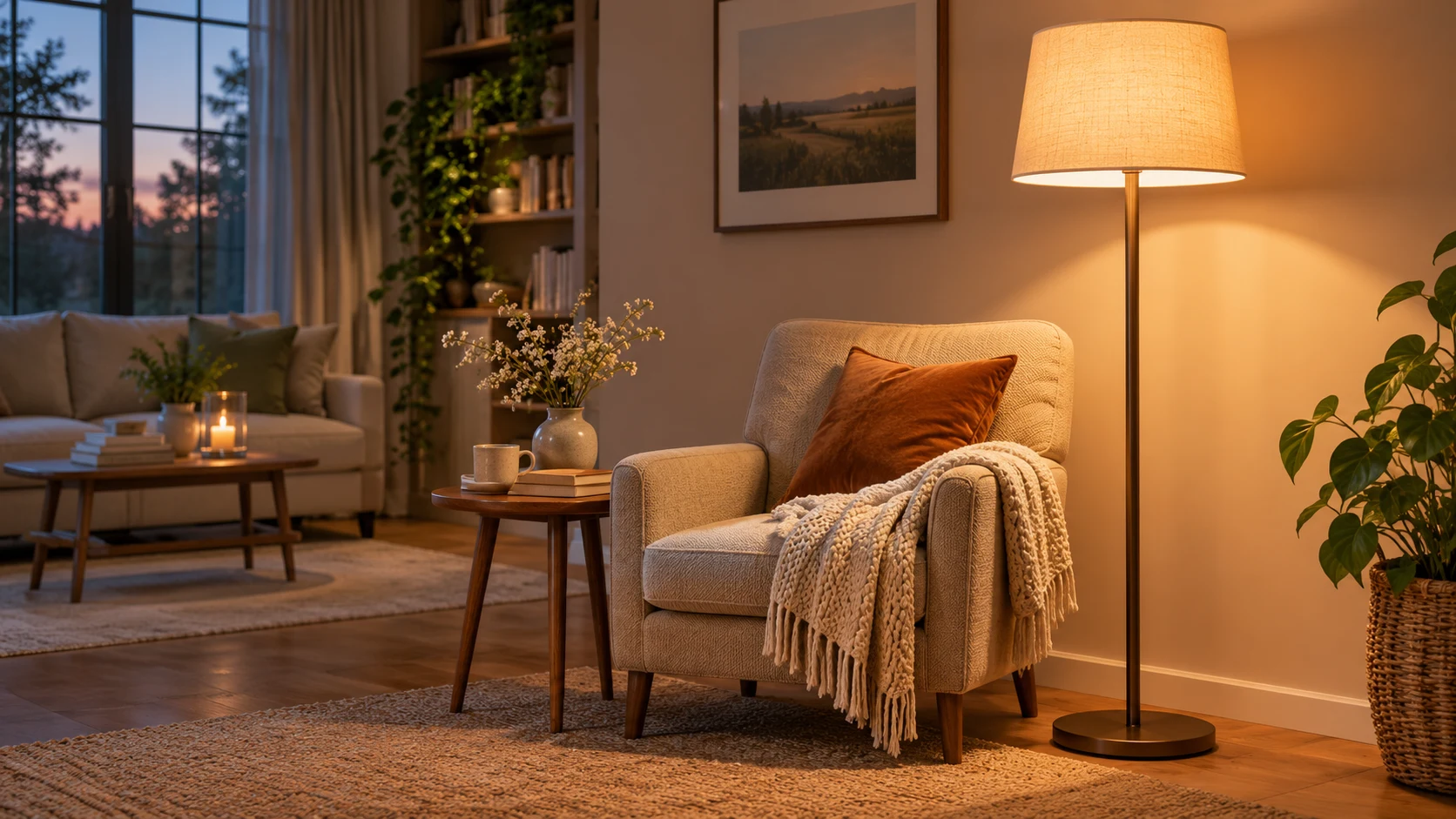
Supplementary lighting is the light that illuminates a specific activity area: the armchair where you read, the desk where you work or the counter where you cook. It is not meant to light the whole room, but to solve a particular task with directed light. General lighting, by contrast, provides light across the room so you can move around the room safely. The difference is not about power, but about reach and direction.
At home, general light may not suffice for tasks that demand visual attention. If you strain your eyes to read or cast your own shadow over the page, you may need to improve the light reaching that particular area. In this guide you will see what supplementary lighting does, how it differs from ambient and reading light, and how to apply it in the living room, the desk and the kitchen.
How it works, why it matters and how it differs from general lighting
Why focused lighting matters for daily tasks
General lighting illuminates the room. Depending on the position of the lamps and where you sit, your body or furniture may cast shadows over a book or work surface. A well-positioned light can help illuminate that area.
Supplementary lighting solves that problem because it sits close to the task and directs the flow where it is needed. Increasing a lamp’s output does not always resolve a shadow: the direction of the light and possible reflections also matter. It is about adding a side light, close and adjustable.
How supplementary lighting works compared with general lighting
Three practical differences separate them. The first is location: general light may come from ceiling fixtures, wall lights or several lamps that together illuminate the room; supplementary light can be a floor lamp, a table lamp, a desk lamp or an articulated wall light.
The second is direction. General light disperses; supplementary light is aimed. A desk lamp or a lamp with an adjustable arm lets you point the beam at the page, the counter or the keyboard without lighting the rest of the room.
The third is control. Supplementary light is usually switched on and dimmed separately. You can adjust the lighting to the activity while keeping enough background light to avoid an uncomfortable contrast with the page. Energy use depends on the lamps and how long they are on.
Nuances between supplementary, ambient and reading light
Although everyday language mixes them, they are not the same. Supplementary lighting is the broad term: any point that complements general light for a specific zone or task. Ambient lighting usually means the general background light in a room. Mood lighting describes the atmosphere you want to create. A cosy atmosphere does not, on its own, ensure enough light for reading.
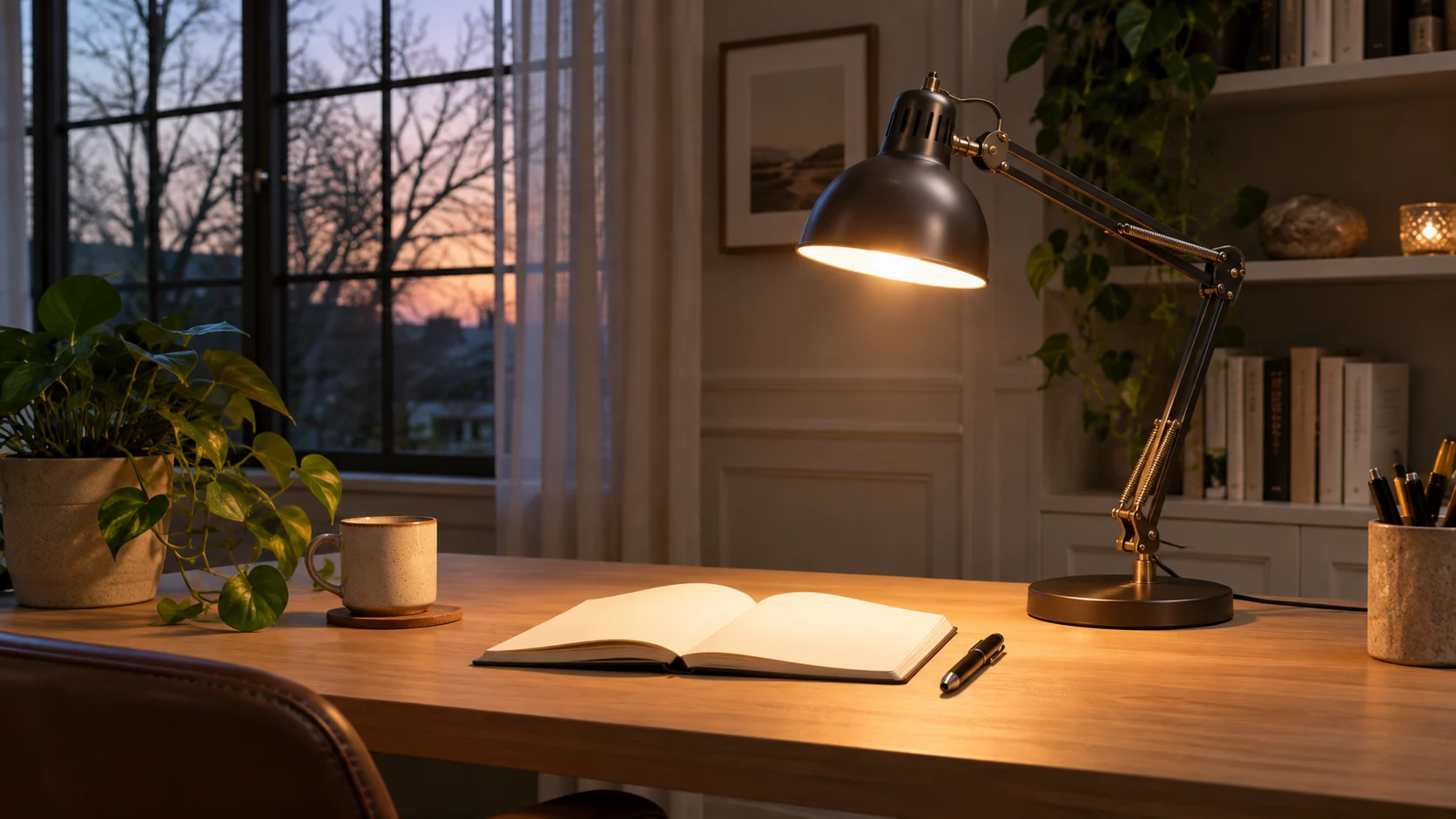
Reading light is a specific type of supplementary lighting: the one placed to read comfortably, with the beam aimed at the page and no reflections in your eyes. A desk lamp can be reading light; a dimmable floor lamp next to the armchair can be too.
Everyday examples in the living room, desk and kitchen
In the living room, supplementary lighting is usually a floor lamp next to the sofa or a table lamp on the side table. What matters is that the light reaches the book or the craft without ending up behind your head. For example, the Rayofly A2 floor lamp in black rattan is a dimmable option that can be aimed at the reading corner, although it does not by itself guarantee a specific light level for your task.
On the desk, a desk lamp with an articulated arm lets you direct the light onto papers or the keyboard. A shade that is opaque on the sides helps prevent glare. In the kitchen, supplementary lighting goes under the upper cabinets to illuminate the counter, an area where cabinets or your body may cast shadows.
Last update 11/23/2026
As Amazon Associates, we earn from qualifying purchases.
Final price and availability are confirmed on Amazon at the time of purchase.
More details in our affiliate disclosure.

For more on general, task and accent lighting, see the US Department of Energy’s residential lighting guide.
Conclusions for balanced lighting at home
General light lets you move; supplementary light lets you do. Combining both by zones is what makes a home feel comfortable and functional. Before buying another ceiling lamp, look at which corner forces you to strain your eyes or casts a shadow over what you are doing.
That corner is the candidate for supplementary lighting. Start there: an adjustable floor lamp next to the sofa, a desk lamp on the desk or an LED strip under the kitchen cabinet. If you want the full framework for choosing the fixture, the guide to preparing household purchases has the checking method before buying.
Frequently asked questions about supplementary lighting
Where should I place the supplementary lamp for reading?
Next to the armchair, to one side, with the beam aimed at the page. Try its position so your body does not cast a shadow on the page and the bulb is not directly in your line of sight. If you share the sofa, check that it does not disturb the other person.
What colour temperature should I choose for supplementary lighting?
Warm light is often chosen for a cosy atmosphere; a more neutral tone may feel comfortable for work. Colour temperature alone does not guarantee good lighting: also check how much light reaches the task and any reflections. If it is adjustable, choose a setting you find comfortable.
Do I need a special bulb for supplementary lighting?
There is no universal bulb. Check the lamp’s socket, the maximum wattage it accepts and the luminous flux (lumens) you need for the task. The bulb’s lumens alone do not guarantee how much light reaches the page: the shade, distance and direction also matter.
Can I use a floor lamp as both supplementary and ambient lighting?
It may serve both purposes if its design and light output are suitable. Dimming lets you vary the brightness, but does not itself guarantee enough light on the page. That versatility is what makes it useful in a living room.
Discover more from Unique trends in fashion, home décor, lifestyle, and gifts
Subscribe to get the latest posts sent to your email.