
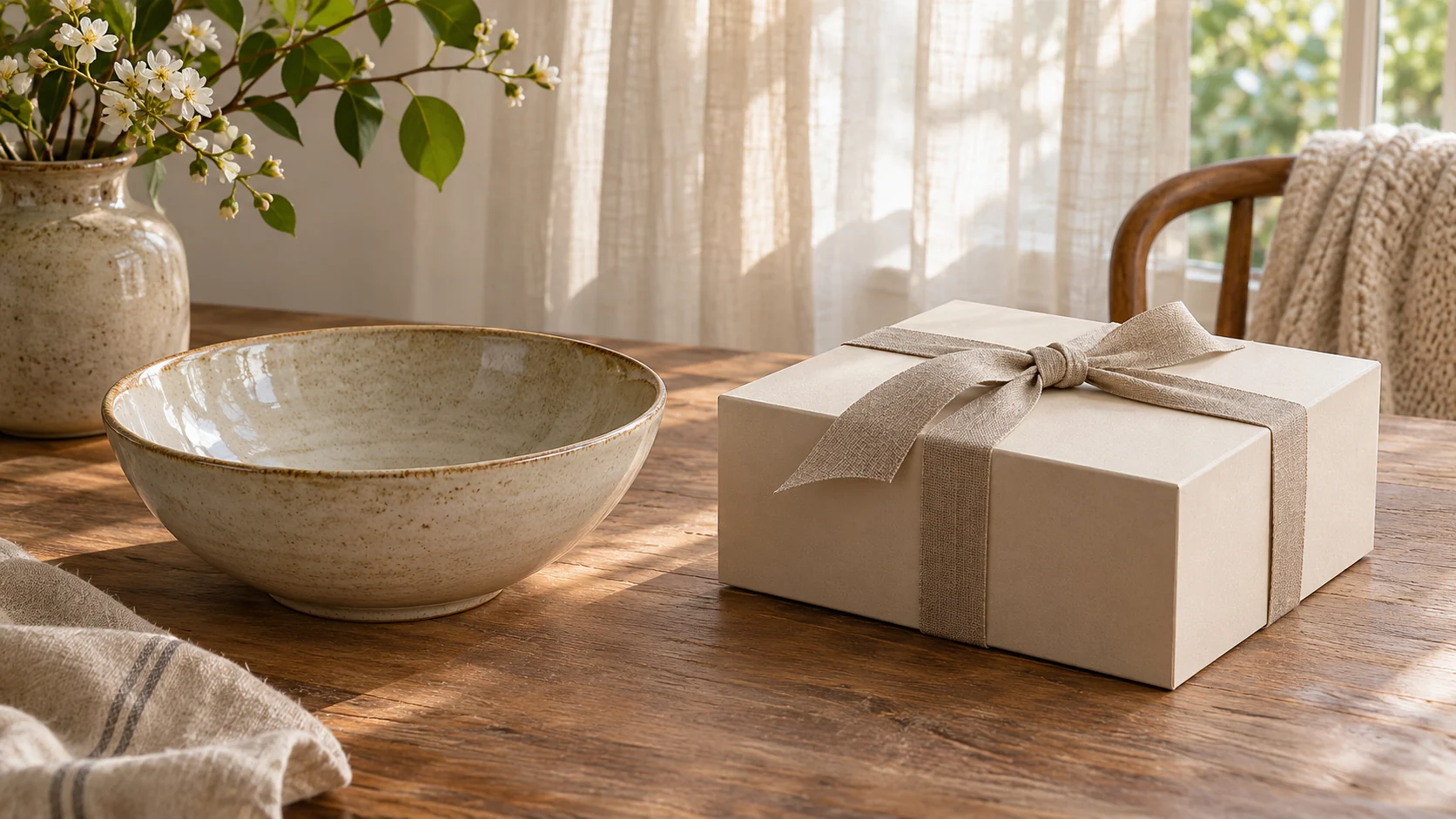
Getting a gift right is not about wrapping it nicely; it is about finding something the other person will actually use. When you look for useful Christmas gifts based on need, the question changes: it is not “what should I buy?” but “what are they missing and going to use?”. In this guide we compare two practical routes: a piece of tableware that covers a real gap or a reusable box that wraps the detail and stays at home.
You don’t need a list of seven ideas. With two well-thought-out routes you can solve several gifts without overcomplicating things. If you want the full Christmas map, the guide to preparing for Christmas in advance orients you by area and by phase.
The two routes to getting it right, based on habit
1. A piece of tableware that covers a specific gap
A piece of tableware works as a gift when it responds to something the person has already mentioned or that shows in their routine. For example, someone who always serves salad in the same chipped bowl; someone who has said they need a serving dish for Sunday dinners; someone who makes desserts and has nowhere to present them.
Before choosing, observe the habit. Ask yourself what they actually use and what they are missing. Then check four things: size, declared use, the care it requires and whether it fits where they will store it. A spectacular serving dish that does not fit in the cabinet ends up unused.
A useful documented example, with no affiliate link or mandatory purchase: the Acebo Navidad stoneware bowl from Zara Home (reference 1273/211/733), in cream and shaped like a holly leaf. That description does not confirm exact size, resistance, oven, microwave or dishwasher use, or permanence in future collections: always check the specific piece and the instructions before deciding.
2. A reusable box that accompanies the detail and stays at home
A clean box in good condition can serve two purposes: presenting the gift and staying afterwards to store objects. The key is that it fits the size of the object, opens without breaking and the material withstands a second use.
Who it fits: someone who values order, who keeps things and who appreciates a nice box that is not thrown away. Who it does not fit: someone with little space or who prefers to get rid of what they don’t need. In that case, better to choose wrapping that can be easily recycled and not add volume.
A rigid box with a fabric ribbon that ties and unties without breaking is a good example. Do not promise that this specific box will last years: it depends on the material and use. You can say that, well cared for, it can serve to store the gift itself or small objects.
Practical comparison and quick guide to choose
The two routes do not compete: sometimes they work together. Giving a needed piece of tableware inside a reusable box solves two things at once. The decision depends on the habit you have observed and on what the other person can genuinely enjoy.
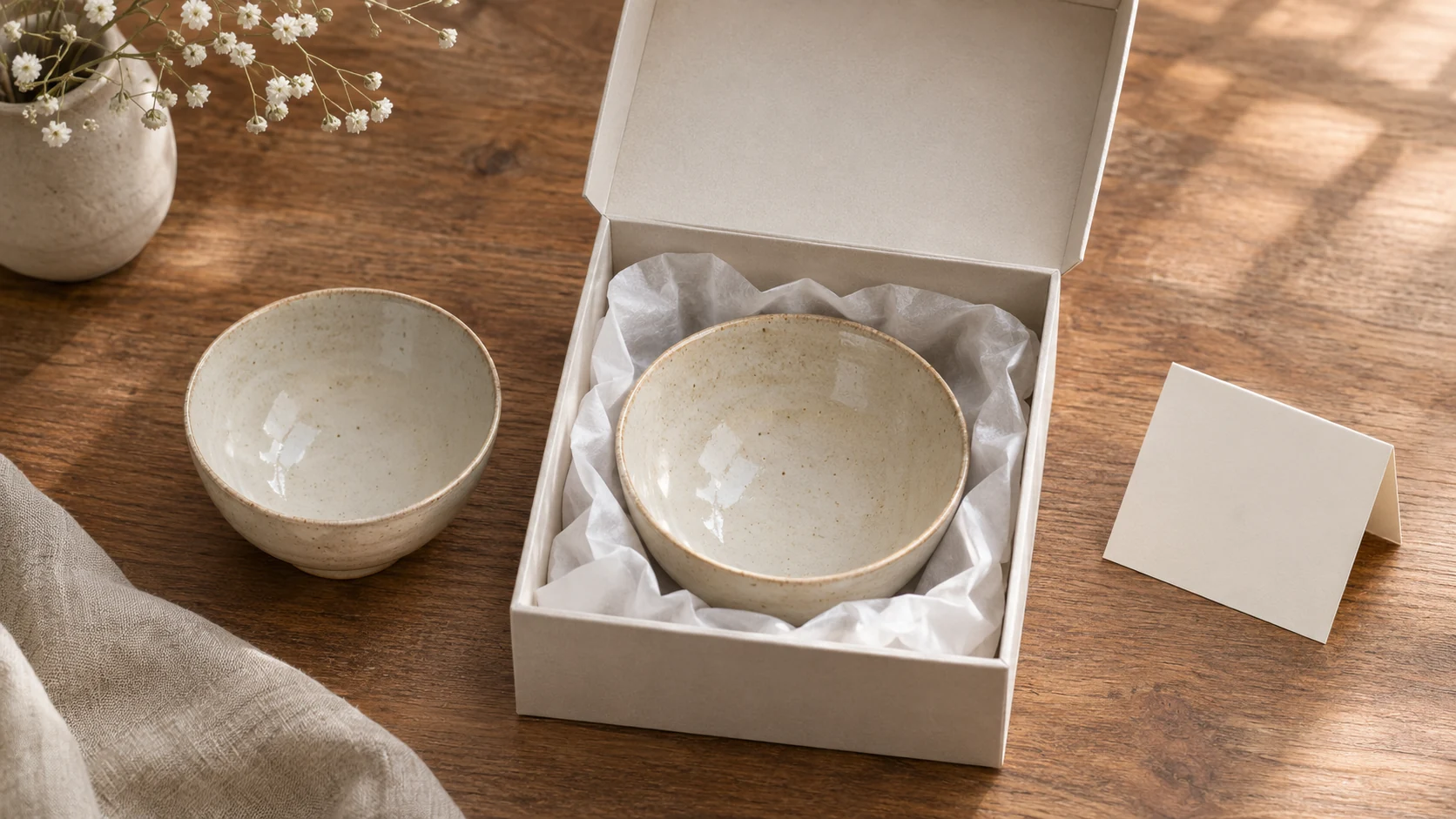
This table summarises the choice based on what you see in the person.
| What you observe in the person | What to check first | Which route fits best |
|---|---|---|
| They use a piece of tableware daily that is worn or broken | Size, care, declared use and where to store it | Needed piece of tableware |
| They like order and keep boxes to reuse them | That the box fits the object and opens without breaking | Reusable box |
| They have little space and value what is functional | That the gift does not take up more than it solves | Small tableware piece or combination with a flat box |
| They like receiving pretty details but do not accumulate | That the wrapping can be reused or recycled easily | Reusable box or simple wrapping |
| You don’t know what they are missing | Ask directly or choose something that can be changed | Combination: neutral piece inside a reusable box |
If the person has a clear habit, the first route wins. If the habit is not clear, the second route works as a wildcard: the gift is still the detail, but the wrapping stays and is useful. And if in doubt, the combination is the safest bet.
What to check before deciding and real limits
Before closing the gift, review four things:
- Don’t assume something old needs automatic replacement. An object with signs of use may still work. Only change it if the person has mentioned it or if there is a real gap.
- Check measurements and care. A piece of tableware that does not fit in the cabinet or cannot be washed like the rest is a gift that ends up in a drawer.
- Ask if a detail is missing. If you don’t know whether the person already has that object or prefers another colour, ask. A timely question avoids an exchange later.
- Keep the purchase and care information separately. Attaching the sheet or a note with the care instructions helps the recipient consult it if needed.
If you want to go deeper into reusable wrapping, the article on what reusable wrapping is explains which materials can be kept and which cannot.
Closing and next step
Giving with the other person’s daily use in mind helps you get it right more often and forget about filler purchases. You don’t need to promise that the gift will definitely be liked, but you can choose with information: what the person uses, what they are missing and what fits their home.
As a next step, choose one person today and write in one sentence what habit or gap you have observed. With that sentence, decide whether the gift fits better in the tableware route or in the reusable box route. And if you feel like continuing to prepare Christmas calmly, the guide to preparing for Christmas in advance has the full map.
Discover more from Unique trends in fashion, home décor, lifestyle, and gifts
Subscribe to get the latest posts sent to your email.