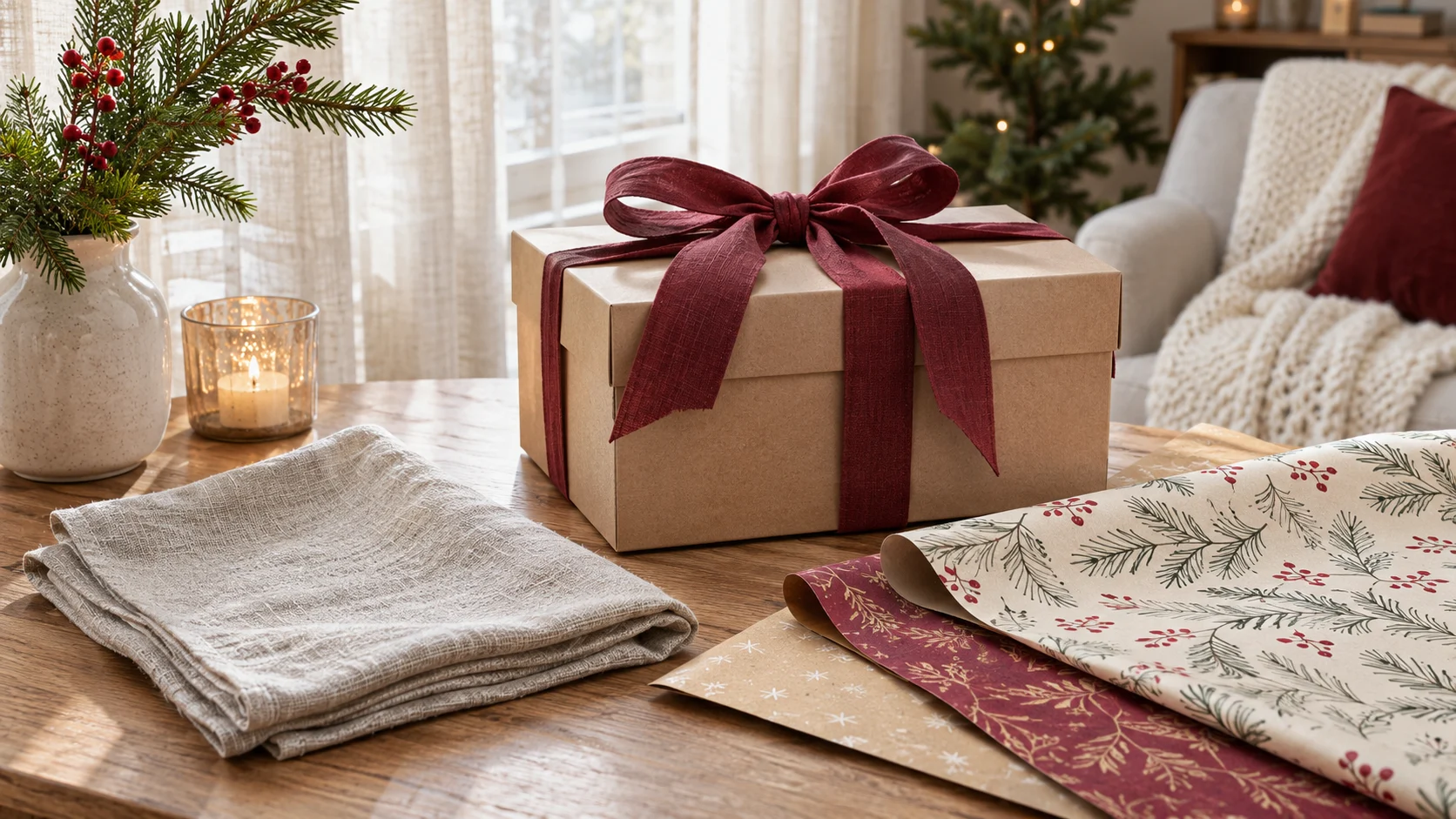
After opening the presents, there are boxes, bags, ribbons and sheets of paper everywhere. Some of those materials are good for wrapping again. Reusable wrapping for Christmas is a clean and suitable material that can be stored and used again on another occasion. In this guide we explain what makes it reusable, what to check before storing it and when to discard it.
Why it matters to tell what is worth keeping
Not everything that wraps a gift can be reused. Very crumpled paper or a broken box will not survive a second use. A clean box, a smooth sheet of paper or a good-condition fabric can be kept. Telling what is worth keeping saves space and avoids piling up materials that will not be useful.
What makes a material storable
A storable material meets three conditions: it is clean, it has no damage that prevents closing it and its condition allows a second use. A clean box with a ribbon can later hold objects if its size and condition allow it. A smooth sheet of paper kept in good condition can wrap another gift. A folded fabric can be reused as wrapping if it keeps its colour and has not frayed.
Suitability for the object it will hold
Size matters. Reusable wrapping must fit the object it will hold. A large box for a small gift takes up more than necessary; a small fabric for a bulky object does not cover it. Before storing a material, check that its size and shape fit what you want to wrap next time.
Closing also matters. Reusable wrapping must open without being destroyed. If closing the box requires strong tape or tearing the paper, it is not good reusable wrapping.
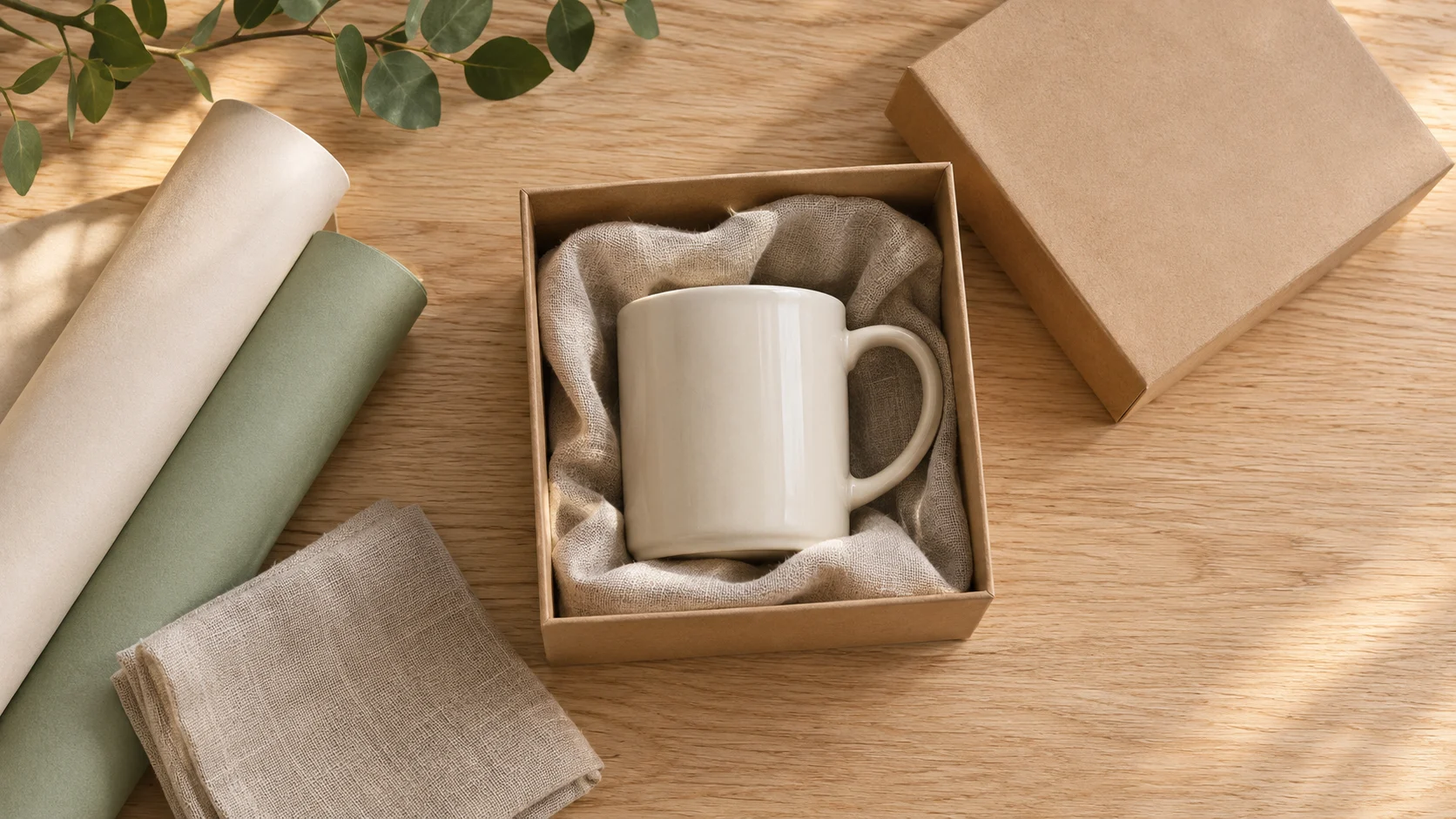
Examples: fabric, box and kept paper
Fabric. A cotton or linen cloth can wrap a gift and be reused later as a bag or as a kitchen cloth, if the material and colour allow it.
Box. A sturdy cardboard box, clean and with intact edges, can hold another object or wrap a similar-sized gift.
Kept paper. A smooth sheet of paper, without deep creases or tears, can wrap a smaller gift. Very crumpled or torn paper will not survive a second use.
Real limits of reusable wrapping
Not all materials work for all objects or withstand any later use. Thin paper can tear when folded again. A damp box loses strength. A stained fabric may not be suitable for a gift. These limits do not make reusable wrapping a bad choice: they only indicate when to discard it.
Nor should you promise a quantified environmental impact. Reusable wrapping can reduce the need to buy new paper, but its effect depends on how many times it is reused and how it is managed. What is in your hands is to check what you have, what works and what doesn’t before deciding.
Conclusion and next step
Reusable wrapping is a material that is clean, suitable for the object and can be opened without being destroyed. Before storing boxes, fabrics or paper, check their condition, their size and their closure. If they meet the three conditions, keeping them extends their useful life and saves you from buying new material next time.
As a next step, separate the materials that do work and place them in an accessible spot next to the decorations and gifts. That way, when it is time to wrap, you will have what you already own at hand and can calmly decide what you really need.
Frequently asked questions
When should I discard crumpled or torn paper?
When the creases are deep or there are tears that prevent covering the object. Smooth paper in good condition can be reused; paper with weakened areas may tear when used again.
What should I check on a box before giving it another use?
Check that it is dry, that the edges are intact and that the size fits the object you are going to store or wrap. A damp box loses strength and is not a good option.
Does fabric need special preparation before storing the gift?
Check that it is clean and dry before using it. If it is stained or damp, it can transfer to the gift. To store it, fold it and place it in a dry spot.
Can all the paper or boxes I have at home be reused?
No. Only materials that are clean, undamaged and of the right size. Those that do not meet these conditions are discarded to avoid piling up unusable material.
Discover more from Unique trends in fashion, home décor, lifestyle, and gifts
Subscribe to get the latest posts sent to your email.