
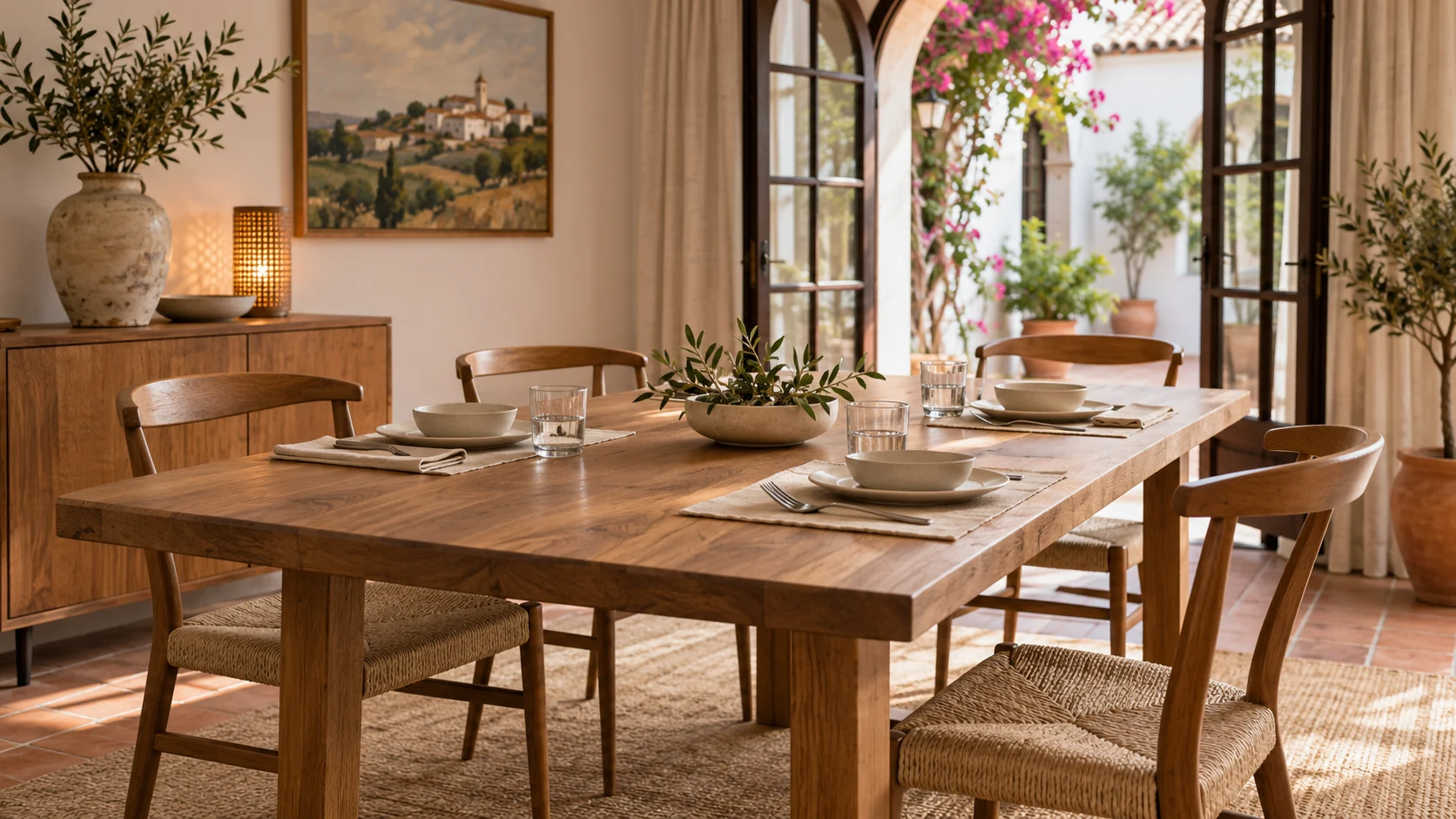
You set the table ahead of time and, at the last moment, discover a chair is rubbing against the wall or the main serving dish doesn’t fit. Learning how to organise Christmas table based on space avoids that kind of surprise. It is not about following universal measurements, but about testing your table with the real chairs, people and tableware before the gathering.
In this guide we propose a simple method to check the available space, place tableware without blocking conversation and rehearse the serving route. If you want the full Christmas map, the guide to preparing for Christmas in advance orients you by area and by phase.
Preparation and first actions
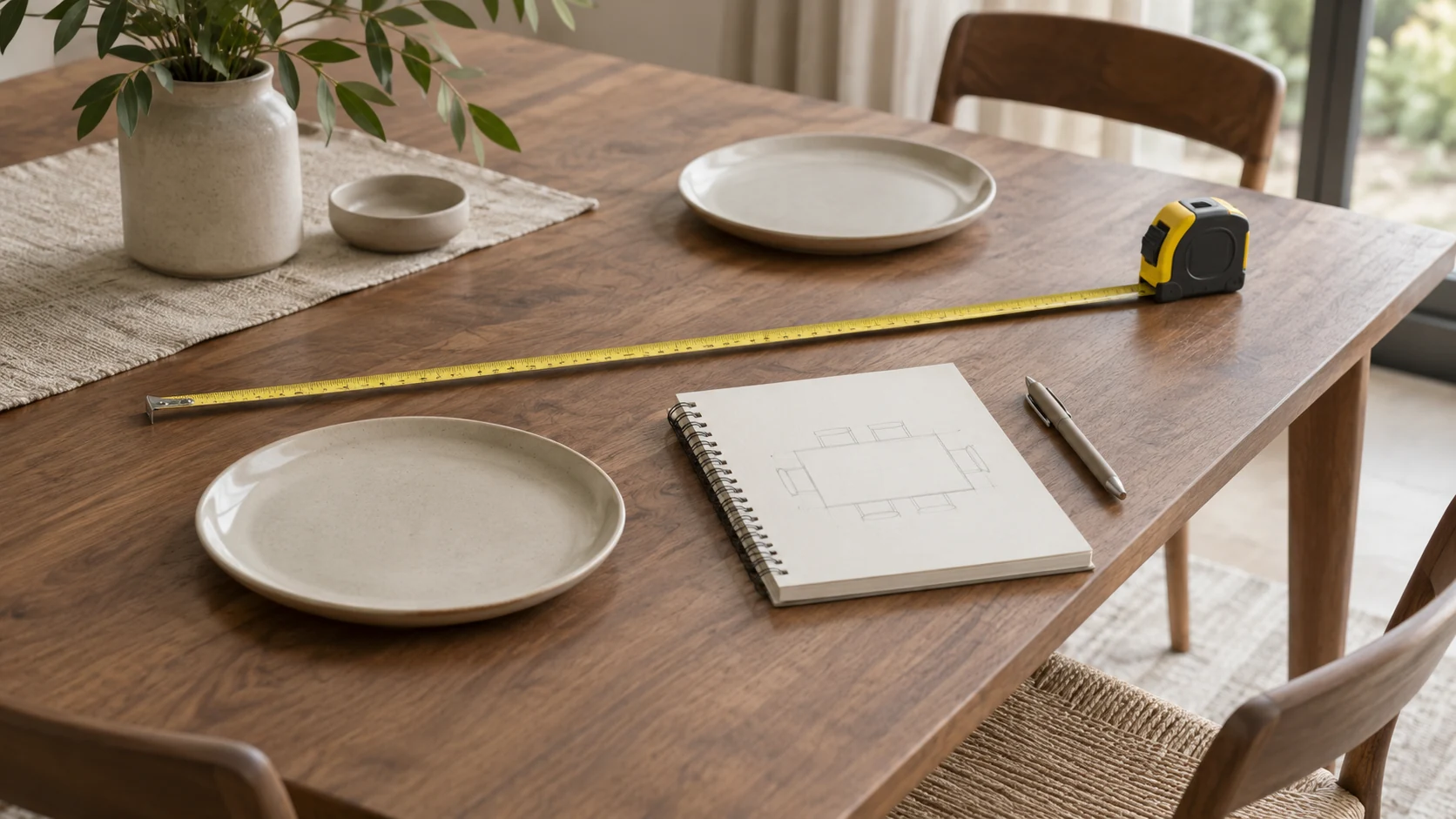
Set aside a quiet hour and gather what you need before you start: the real chairs you will use, a tape measure, paper and pencil for a sketch, the tableware you usually use and the centrepiece you have in mind.
Test the chairs with people
Place the chairs around the table as you would on the day of the gathering. If you can, sit in each one and check whether you can get up without another person having to move. If space allows, test with the people who will use the table: each one has their own body and their own mobility needs.
Then walk behind the chairs. If you have to brush past or ask someone to move aside to get by, that arrangement does not work. Reduce obstacles or change the layout before continuing.
Measure the distances with a tape
Note the real measurements you observe: distance between the edge of the table and the wall, free space between chairs, clearance for passage between the table and other furniture. Do not look for an ideal number: look for the one that works in your dining room. A table with more room can take more chairs; a narrow table may need fewer.
Execution, checking and difficulties
With the space checked, it is time to place the tableware, choose the centrepiece and rehearse how you will serve. These three things decide whether the table works or whether you end up moving plates over your guests.
Place the tableware without obstacles
Gather the plates, serving dishes and glasses you have. They do not need to form an identical collection: what matters is that they allow the planned service and that their condition and care fit. Check how much room they take up on the table. If a serving dish is too big for the available space, consider serving it from a stable side support.
Before buying a full new set, consider whether a specific replacement solves the essential gap. The priority is that you can serve without blocking the path of the other dishes.
Choose a low centrepiece that lets people see and pass
The centrepiece must allow people to see those opposite and leave real space to serve. Try stable objects and avoid tall or bulky arrangements that cut off conversation or block the passage of serving dishes. Keep any flammable element away from heat sources. Do not assume a centrepiece fits just because you have seen it in a photo: test it on the table.
Rehearse the serving route
Draw a simple sketch of the table and mark where the serving dishes come in, where plates are cleared and where pieces that do not fit on the table will go. One main serving dish within reach and another on a stable side support outside the passage area usually works well.
Do the physical test with the chairs in place. Identify the points where someone would have to stand up or where a plate would have to pass over another person. Correct what you can before the gathering.
Practical sheet: measurements, pieces and decisions
Copy this table into a notebook or a sheet of paper. It helps you record what you have checked and decide the adjustments.
| Area or step | Real measurement or check | Adjustment or decision |
|---|---|---|
| Passage between chair and wall | ||
| Space between chairs | ||
| Clearance for serving from behind | ||
| Surface taken up by the main serving dish | ||
| Height of the centrepiece | ||
| Side support outside the table |
Fill the second column with what you observe in your dining room and the third with the decision you make: move a chair, move a piece of furniture, serve a dish from outside the table or reduce the number of pieces. The table can be copied on paper or in a notebook.
Conclusion and next step
Organising the table based on real space gives you a clear picture of what works in your dining room before the gathering. With the chairs tested and the route rehearsed, on the day of the celebration you focus on conversation, not on obstacles.
As a next step, choose one adjustment today. It could be moving a chair, changing the centrepiece or preparing a side support. With that first change you start testing the table. If you feel like continuing to prepare Christmas calmly, the guide to preparing for Christmas in advance has the full map.
Frequently asked questions
What if a chair is tight against the wall?
Try moving it or reducing the number of chairs on that side. If you can’t move it, consider whether that person can sit without someone having to move. If not, redistribute the seats.
How do I choose the centrepiece if the table is narrow?
Choose a low, elongated centrepiece, or spread several small objects along the table. The goal is to let people see and pass. Avoid tall, bulky arrangements.
Do I need all the tableware to be identical?
Not necessarily. If the tableware you have covers the expected guests and has no broken pieces, you can combine it if the set is functional. The priority is that the service works.
What should I check on a side support?
Check that it is stable, outside the passage area and close to the table for comfortable serving. Avoid tall supports that could tip over.
Discover more from Unique trends in fashion, home décor, lifestyle, and gifts
Subscribe to get the latest posts sent to your email.