
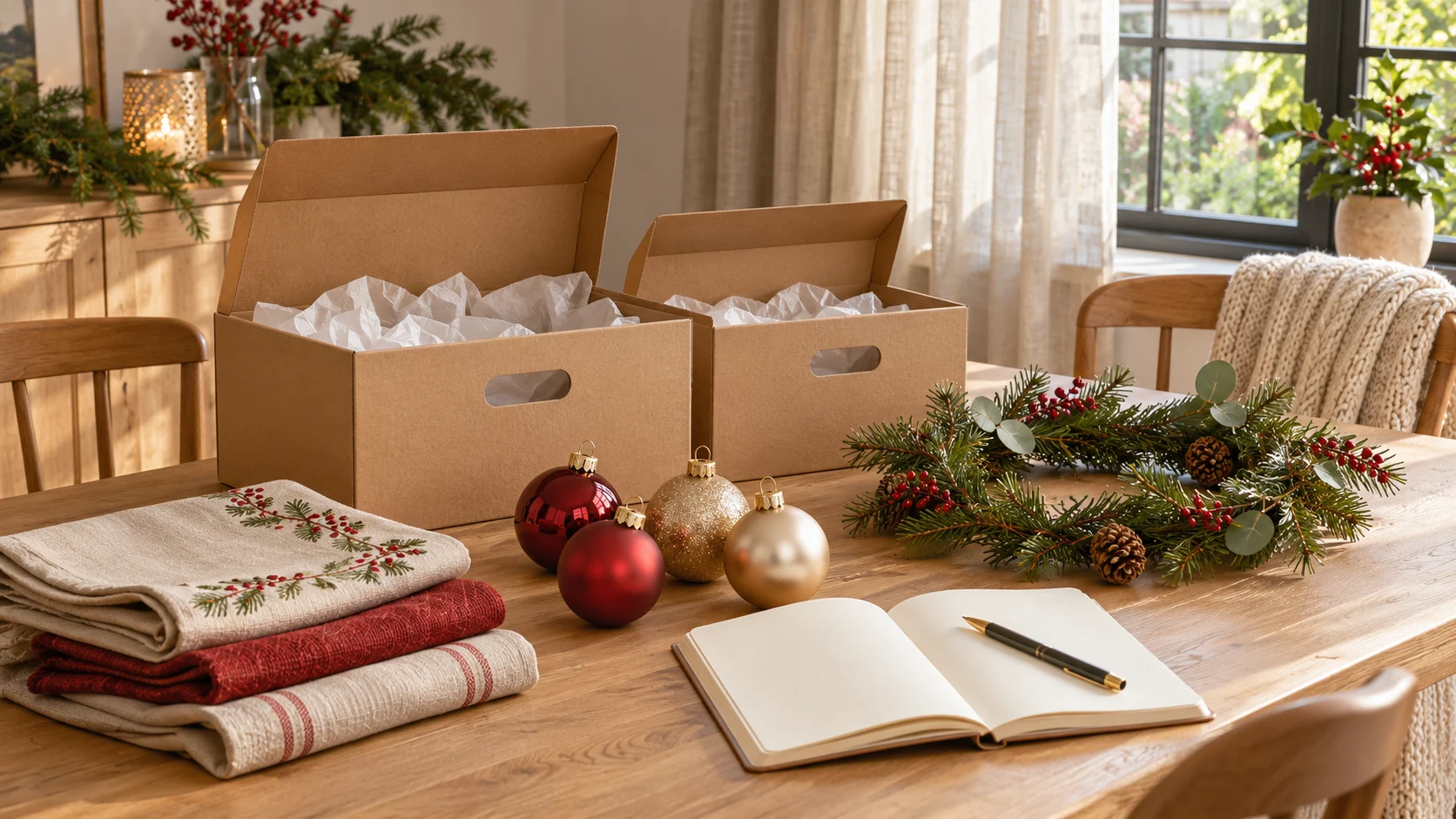
Opening the Christmas boxes and not remembering what is inside is more common than it seems. That is why it is worth making a Christmas decoration inventory before buying anything new. In this guide we propose a simple procedure to review lights, ornaments, textiles and tableware, classify their condition and decide what is really missing. Without improvised shopping lists and without buying the same thing twice.
Preparation and first actions
Set aside a large table and a quiet hour. Take out all the boxes and bags of Christmas decorations and open them one by one. You don’t need to take everything apart: just separate the groups to know what you have.
Open the boxes and group by type
Place the decorations in three groups on the table:
- Lights and hanging elements: garlands, LED strips, baubles, figures and any piece with a cable or batteries.
- Table and shelf ornaments: centrepieces, candles, figurines, wreaths and loose decorative pieces.
- Textiles and tableware: tablecloths, table runners, fabric napkins, plates, serving dishes and Christmas glasses.
For each group, note the approximate number of pieces, the predominant colour and whether it uses cables or batteries. A photo of the whole set of each box helps you remember later where each piece was.
Check lights and cables before storing
Lights are the most delicate part of the inventory. Before considering a garland good, check the cable and the plug. If the cable is cut, the piece is coming apart or there are burnt-out bulbs, set that garland aside as damaged. Do not repair electrical cables or reuse a strip with burnt-out bulbs even if the rest lights up. Any component replacement only applies if the manufacturer expressly allows it, with the device unplugged and following their instructions.
Execution, checking and difficulties
With everything separated, it is time to decide what stays, what needs review and what gets replaced. This phase also includes counting what you have for the expected guests.
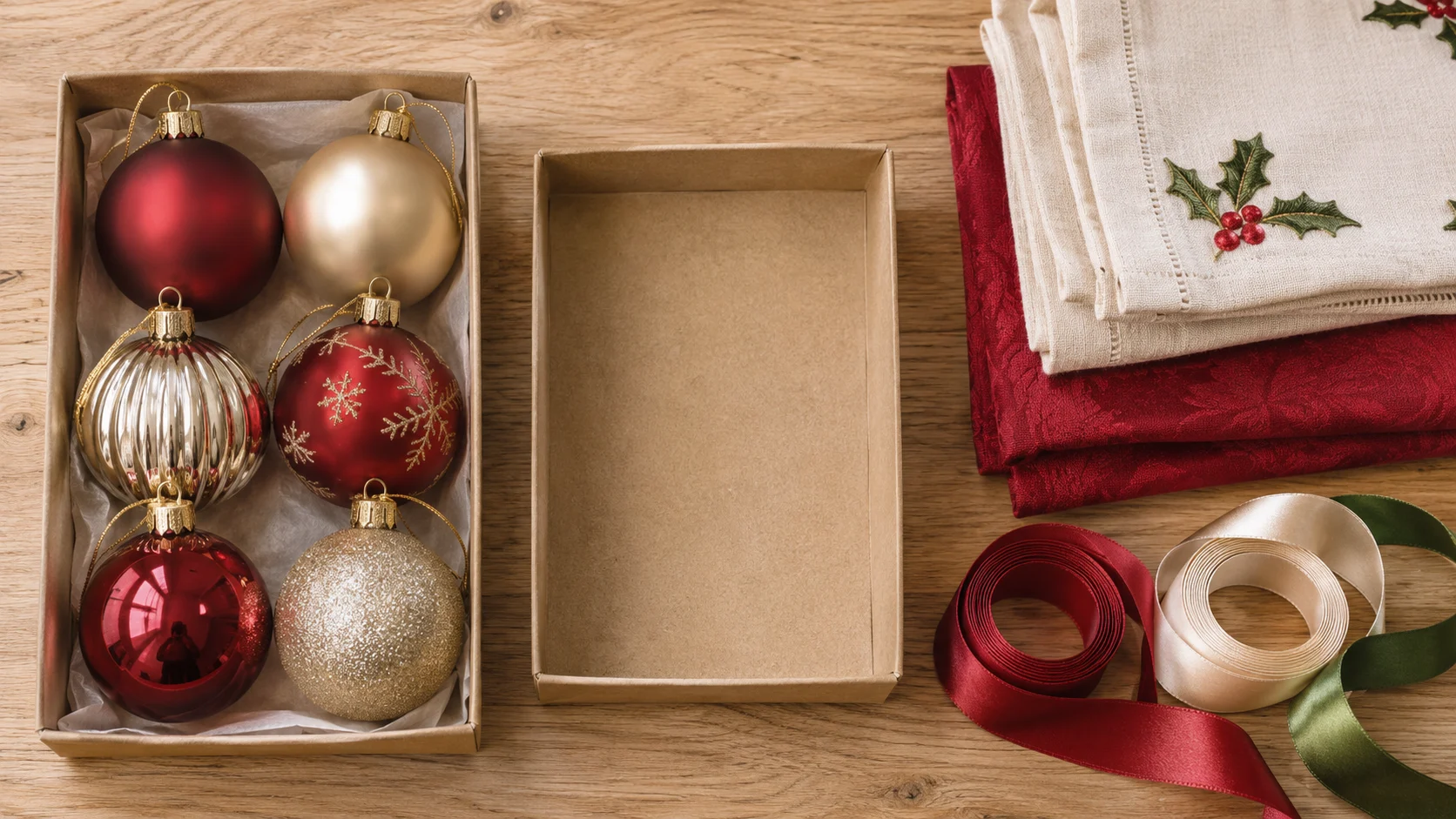
Classify each piece into three groups
To avoid mixing conditions, assign each piece to one of these three groups:
- Reusable as is: the piece is whole, in good condition and works.
- Pending review: the piece could work, but you need to check the manufacturer’s instructions before using it or replace a component the manufacturer allows.
- Damaged: the cable is cut, the piece is coming apart or the lights do not work safely. Set it aside and do not reuse it.
Count textiles and tableware
Lay out tablecloths, runners and fabric napkins to look for stains or tears. Count plates, serving dishes and glasses available according to the guests you expect. They don’t need to match in design if they can be used together. What matters is knowing how many you have before buying more.
Inventory sheet: have, need and priority
Copy this table into a notebook or a spreadsheet. Fill in one row per group and review it before buying.
| Group | What I have | What is missing | Priority | What to check before buying |
|---|---|---|---|---|
| Lights and hanging elements | ||||
| Table and shelf ornaments | ||||
| Textiles (tablecloths, napkins) | ||||
| Tableware (plates, serving dishes, glasses) |
In the What to check before buying column, note the data you need: measurements, number of pieces, bulb type, compatibility with candles or whether the piece is suitable for indoor use. For priority, use a simple scale: high, medium or low.
Common difficulties
Some situations complicate the inventory. If a garland only lights up in part, do not reuse it without the manufacturer’s instructions. If the textiles don’t match each other, there is no need to replace them if they are still useful. And if a piece’s listing is missing, look for the model or ask the seller before deciding.
Conclusion and next step
Making a Christmas decoration inventory gives you a real picture of what you have before buying. It saves duplicate purchases, detects damaged items and helps you decide which pieces deserve replacing. With the table in hand, the decision to buy becomes much more concrete.
As a next step, keep the sheet in a visible place during the season. If you have spare pieces this year and want to organise them for the next, you can check our general household purchases guide when it becomes available.
Frequently asked questions
What should I do with a garland that only lights up in part?
Do not reuse it without checking the cable and the manufacturer’s instructions. If there are burnt-out bulbs or the cable is damaged, set it aside as damaged. Replacing components only applies if the manufacturer expressly allows it.
Do I need to replace mismatched textiles?
Not necessarily. If the tablecloths, runners or napkins are still in good condition and can be used together, there is no need to replace them. Priority depends on whether the set works for your table.
What if the manufacturer’s information for a piece is missing?
Before using it, look for the model or ask the seller. If you cannot confirm safe use or compatibility, apply caution: do not reuse it until you have clear information.
Should I inventory new decorations too?
Yes. Noting what comes in this year helps you know what you have next year and prevents buying the same thing again. A photo of the year’s set makes next year’s inventory easier.
Discover more from Unique trends in fashion, home décor, lifestyle, and gifts
Subscribe to get the latest posts sent to your email.